Sarah Perkins
Postdoctoral Researcher
Email: sep18@psu.edu
Phone: 814-863-2099
Fax: 814-865-9131
Office: 512 Mueller Laboratory
Research
I use a combination of field and laboratory experiments to determine the role of individuals in disease dynamics, in particular:
The role of superspreaders in disease persistence
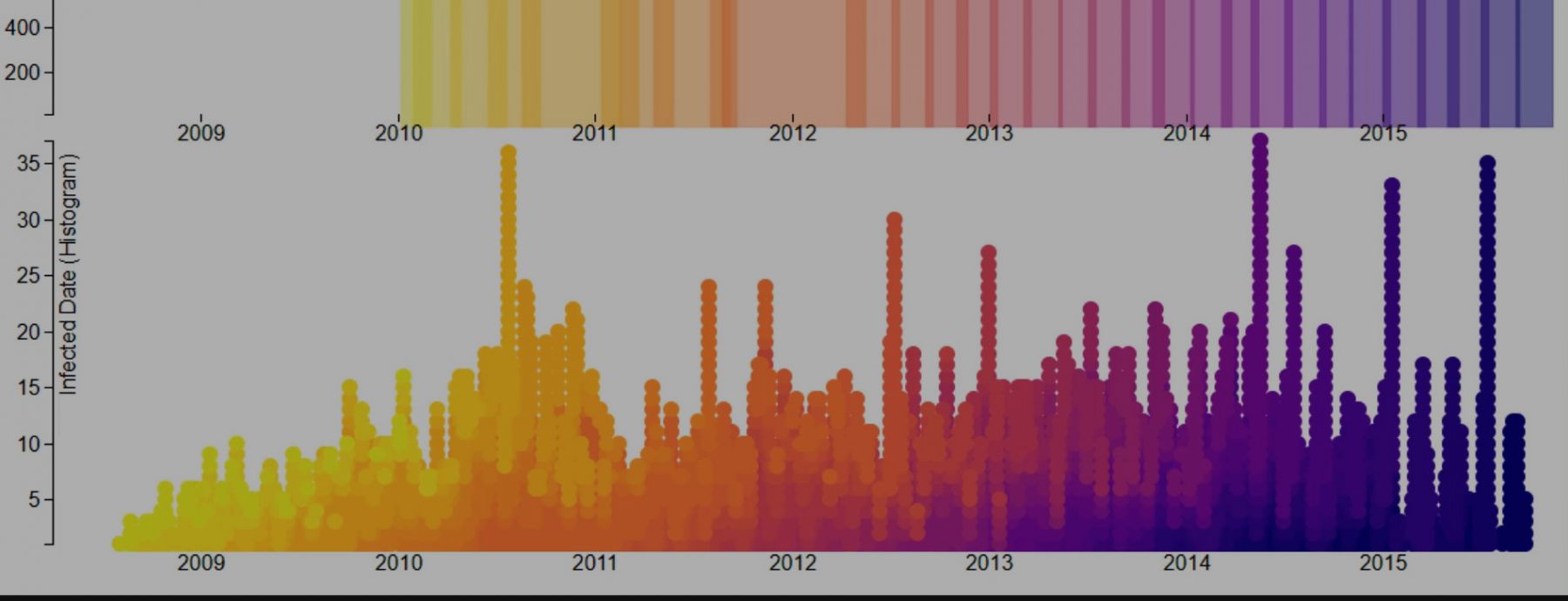
Individuals within a population are not equal; they differ in their exposure and susceptibility to parasites. These heterogeneities in infection status create "super-spreaders": hosts that support the highest vector intensity (often, 20% of the host population can account for at least 80% of pathogen and parasite transmission). Using a model system of ticks, tick-borne disease and rodents I am identifying super-spreader individuals. I have found that sexually mature male rodents of high body mass account for the majority of tick-borne pathogen transmission; this may be a functional group at which to direct disease control measures.
Rodent social systems as a model for disease dynamics on networks
I am examining the role that highly-connected individuals play in disease transmission. To do this, I am constructing contact networks using time series capture-mark-recapture data from experimentally-manipulated rodent populations.
Parasite community interactions in rodent populations
I am interested in parasite community succession. Using a variety of techniques I monitor and manipulate the parasite community structure of a population of rodents, to determine the role of different parasites and interactions between them.
Using bioluminescent reporters to study disease dynamics
In collaboration with Dr. Vyv Salisbury at the University of West England, UK, I am developing an in-vivo real-time imaging system for studying disease dynamics.
Helminths as vectors of pathogens
Some pathogens can associate with helminths to facilitate transmission between hosts. I am using bioluminescent reporter systems (see above) to determine the role that helminths play as vectors of bacterial pathogens in vertebrates. I am also investigating what ecological advantages may accrue to bacteria that associate with free-living bactiverous nematodes.