Document Actions
Daniel M. Parker
Study systems include
humansmalaria
Selected publications
Miao J., Fan Q., Parker D., Li X., Li J., Cui L. (2013) Puf Mediates Translation Repression of Transmission-Blocking Vaccine Candidates in Malaria Parasites. PLoS Pathogens: 9(4), e1003268.
Weiss K.M., Parker, D.M. (2013) Will you stop bugging me? Malaria and the evolutionary challenge that won't go away. Evolutionary Anthropology: 22, 46-51.
Parker, Daniel, Rujira Lerdprom, Wanna Srisatjarak, Guiyun Yan, et al. (2012) Longitudinal in vitro surveillance of Plasmodium falciparum sensitivity to common anti-malarials in Thailand between 1994 and 2010. Malaria Journal 11(290).
Wang Z, Parker D, Meng H, Wu L, Li J, et al. (2012) In Vitro Sensitivity of Plasmodium falciparum from China-Myanmar Border Area to Major ACT Drugs and Polymorphisms in Potential Target Genes. PLoS ONE 7(5): e30927. doi:10.1371/journal.pone.0030927.
Cui L, Wang Z, Jiang H, Parker D, Wang H, Su X, Cui L. (2012) Lack of Association of the S769N Mutation in Plasmodium falciparum SERCA (PfATP6) with Resistance to Artemisinins. Antimicrobial Agents and Chemotherapy: Published ahead of print 21 February 2012, doi: 10.1128/AAC.05943-11.
Research interests
I am broadly interested in the intersections of infectious disease, human demography, and population ecology. Methodologically I enjoy using spatial, temporal, and systems analyses.
My dissertation research focuses on human migration and malaria dynamics within Southeast Asia. More specifically, I’m interested in:
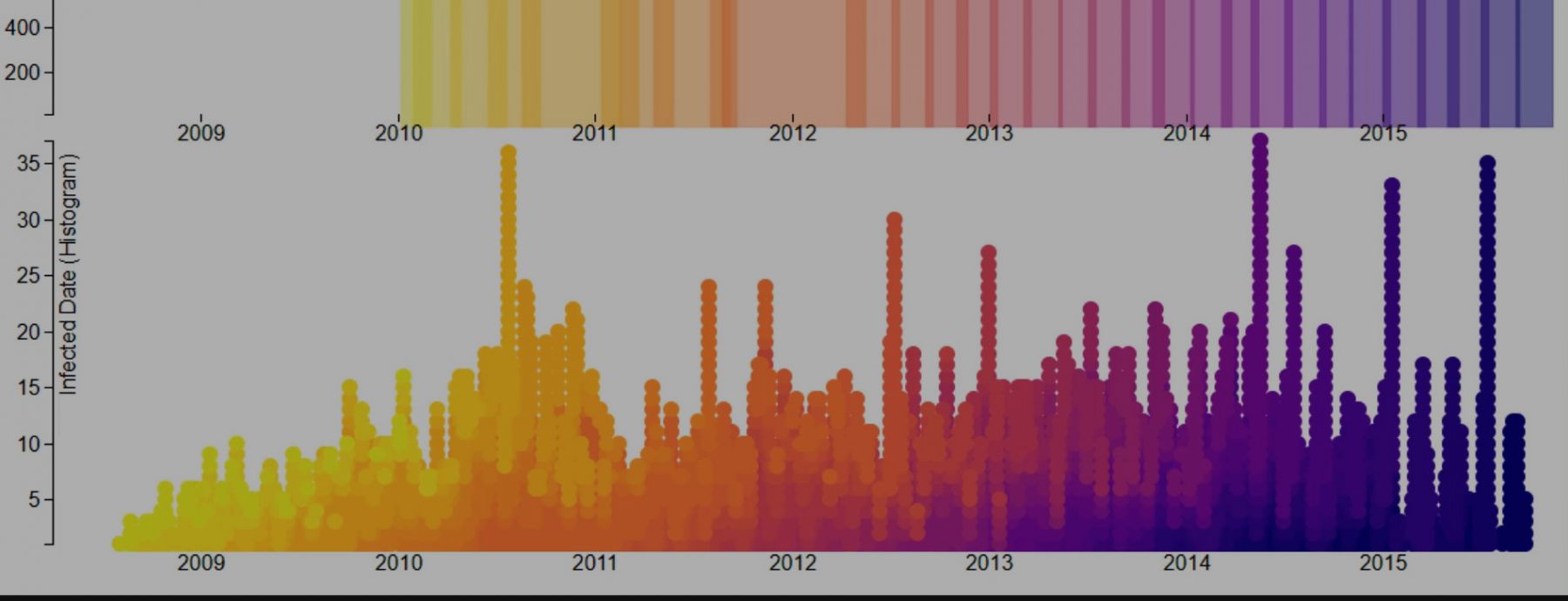
1.) Seasonality in malaria cases 2.) The distribution (both spatially and temporally) of malaria parasites that are resistant to antimalarials 3.) The spatial distribution of humans that are resistant to malaria
Human migration can influence these three subtopics. For example, infected migrants (some of whom migrate seasonally) can introduce parasites into naïve populations. Likewise, they may introduce drug resistant strains to new geographical regions and new parasite populations (parasite gene flow via human migration.) Finally, human migration and gene flow, along with non-random mating patterns and isolation by distance, can influence the population genetics of human populations in the region. My current study populations are ethnic minorities (mostly Karen and Kachin) who live along the Thai-Myanmar and China-Myanmar international borders respectively. These groups are highly mobile, have high frequencies of inherited blood disorders that appear to protect against severe malaria, and they live in regions known to harbor drug and multi-drug resistant parasites.
Some of my previous research has looked at mosquito ecology, potential associations between candidate genes and antimalarial drug sensitivity in malaria parasites, spatial and temporal dynamics in historical tuberculosis cases, and the influence of meteorological factors in all-cause mortality, in tuberculosis mortality, and in the timing and duration of dengue fever outbreaks.