Document Actions
Darla Lindberg
Study systems include
Systems Theory and complexity thinking (indeterminate and non-reductive) applied to:
- Resilient bio/agro/ecosystems
- Generative, phylogenic and non-pliant methods of modeling, aggregating or communicating environmental data
- Health + environment + institutions + human behavior
Selected publications
Lindberg DV, Jones Z, Li J, Longenbach A, Mosemann D & Rivera D (2011). Global Forces + Local Factors: advancing policy formation as a function of feedbacks between behavioral and environmental indeterminate systems. Proceedings Vulnerability and Adaptation: Focus - Marginal Peoples and Environments. ICARUS II Conference. School of Natural Resources and Environment. University of Michigan, Ann Arbor, MI.
Lindberg DV, DeLeon G, Mosemann D (2008). Institutional Design: the welfare of border-situated cities as a practical objective. Proceedings True Urbanism: Designing the Health City. 46th International Making Cities Livable Conference. Santa Fe, NM.
Pawar SR, Cimbala JM, Wheeler EF & Lindberg DV (2007). Analysis of Poultry House Ventilation Using Computational Fluid Dynamics. Transactions of the ASABE. Vol. 50. No. 4, pp. 1373-1382. September.
Lindberg DV (2006). Systems theory: synchronicity, indeterminacy and doubt. Proceedings Association of Collegiate Schools of Architecture (ACSA) 94th Annual Meeting, Salt Lake City, Utah.
Associate Professor of Architecture
Email: darla.lindberg@psu.edu
Phone: 814-865-1574
Office: 421 Stuckeman Family Building
Research interests
My research work represents an expertise in whole systems dynamics contributing to a greater understanding of health, disease spread, design and the built environment. My design research embraces an intentional theoretical underpinning, that of Complexity and General Systems Theory (GST). Thinking in complexity is an essential framework for comprehending the capacity of huge numbers of unique phenomena acting in synergetic relation. Characteristics of complexity explain the nonlinear, indeterminate and irreducible complex systems linking till agriculture to settlement infrastructure to global disease dynamics. GST is the study of the organization of that phenomena in relation. Research interests fall in these main areas:
Architecture and building physics
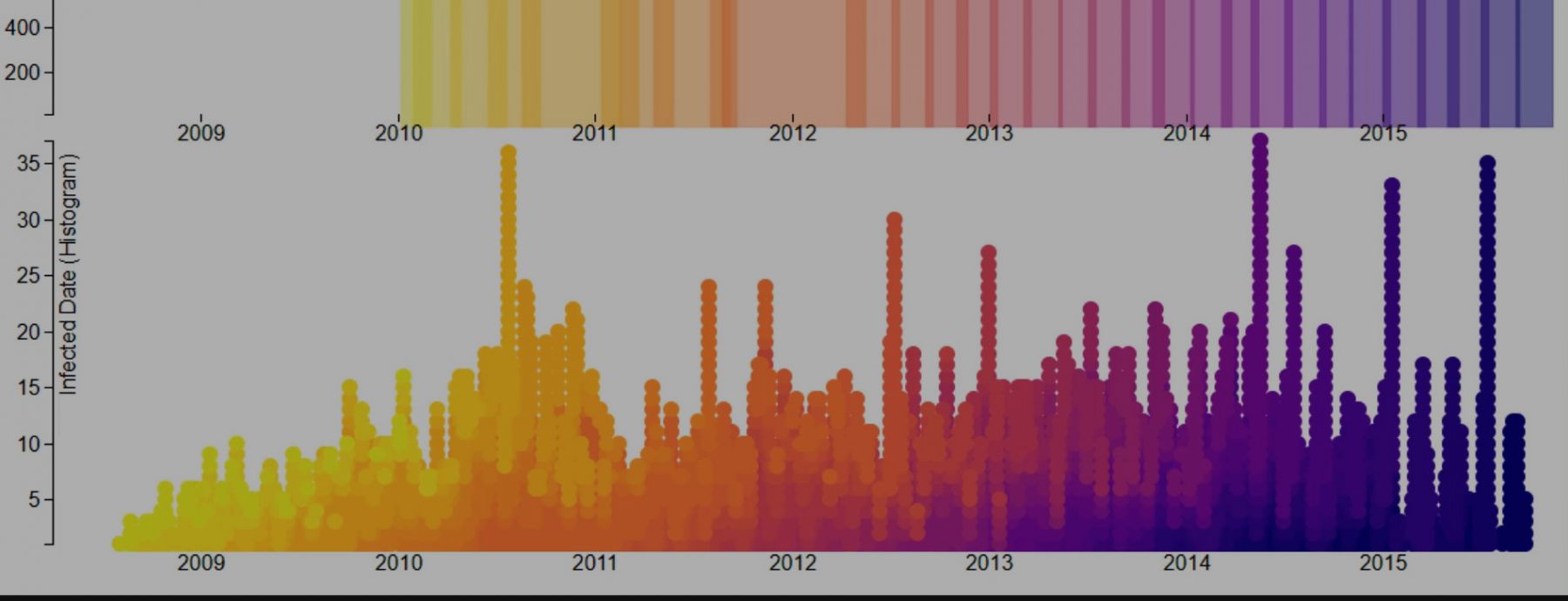
- Mapping corridors for airborne diseases. This generative mapping identifies potential roles for variables that affect systems behavior (e.g. climate trends, urban density and sprawl, land use management, globalization and trade, seasonal migration and till agricultural production).
- Designing buildings that limit disease spread. I am currently working with David Hughes on deployable natural systems disease barriers for health care treatment centers in developing countries. Prior work includes systems designs that reduce spread of pathogens (e.g. Avian Influenza) and filter, capture or eradicate other unhealthy emissions from poultry agricultural production facilities with faculty from agricultural engineering and mechanical engineering.
Characterizing and modeling dynamic systems behavior
- Asset mapping. We determine the natural assets of human communities and their environments, and identify those factors and interactions that increase the sustainability and resiliency of the communities.
- 3D Dynamic Data Modeling. Represents real-time dynamic data from the field (that can be archived in a database) using a graphical algorithm editor tightly integrated with a 3D modeling tool.
Game theoretic feedback and General Systems relational strategies
- This work uses Game Theory tools not frequently employed in traditional architectural investigations along with the relational strategies of General Systems Theory. Together these theories allow us to investigation the relational feedbacks between environments we share in common, the institutions invested in those shared environments and the human individual or collective behavior.
For a closer look at a range of research activity and coursework see http://www.policyspace.info