Eddie Holmes
Professor in Biology
Email: ech15@psu.edu
Phone: 814-863-4689
Fax: 814-865-9131
Office: 609 Mueller Lab
Research
My research integrates ideas from a number of different fields, most notably evolutionary genetics, virology and the ecology of infectious disease. I am currently concentrating on three main areas, using RNA virus study systems.
Evolutionary genetics
I am investigating questions such as:
- How adaptable are RNA viruses, what role do recombination and epistasis play in their evolution, and what factors affect their mutation rates?
- What are the fitness trade-offs when viruses infect multiple host species, and what roles do these play in viral emergence?
Comparative genomics
My work in this area includes:
- Large-scale comparative analyses of viral genomes to measure the relative importance of gene duplication, gene loss and lateral gene transfer.
- Modelling genome evolution to learn more about evolutionary mechanisms, and to reconstruct evolutionary history (e.g. are RNA viruses descended from escaped cellular genes?)
Molecular epidemiology
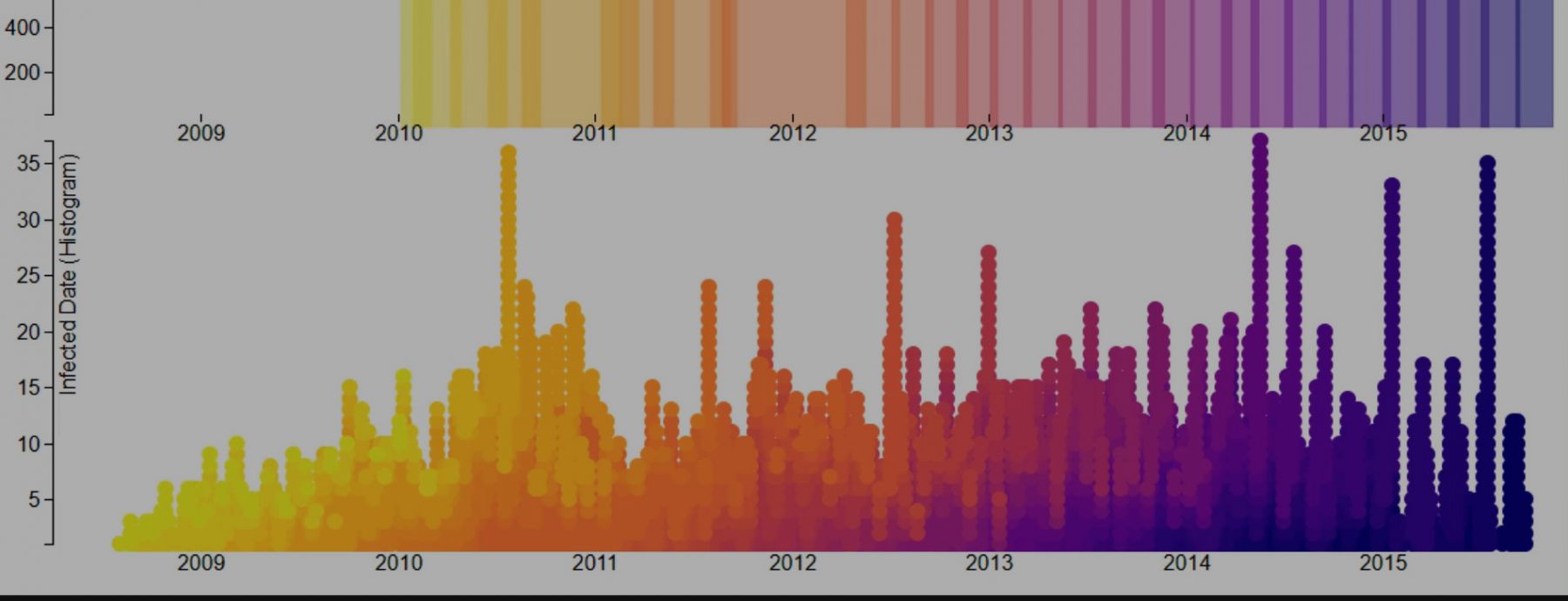
Much of my research in this area fits within the emerging discipline of phylodynamics.
- I am characterizing dengue virus genetic diversity and exploring the evolutionary forces that give rise to it.
- I plan to study the basis of cross-species transmission, and evolutionary basis to persistence, using lyssaviruses (e.g. bat rabies).
CIDD-related teaching
BIOL 497C: The evolution of infectious disease
Emerging and reemerging diseases are now a major threat to human health, while older ailments, such as malaria and tuberculosis, continue to kill millions of people each year. This course explores pathogen evolution at scales from the infection of individual patients to the global human population, including:
- How and why microbial pathogens evolve in the way they do; what this means for disease
- How host populations have evolved counter-strategies to prevent or limit their infection
For each major class of pathogen (viruses, bacteria and pathogenic eukaryotes), we will learn:
- How genetic variation is generated
- The major mechanisms of evolutionary change
- How the spread of these pathogens can be reconstructed using phylogenetic techniques
- How pathogens are able to evade host immune responses and different treatment strategies
As well as exploring evolution at the pathogen level, the course will also examine how pathogens have had a major effect on host evolution (particularly by changing the genetic structure of host populations), and how hosts have evolved intricate defenses to combat infectious diseases.
A variety of diseases will be considered, especially those that cause serious mortality and morbidity in humans today (including HIV/AIDS, influenza, rabies, hepatitis C, dengue, tuberculosis, meningitis, E. coli, antibiotic bacteria and malaria). Special emphasis will be given to new, emerging diseases, such as SARS and avian influenza, and the evolutionary forces that allow their causative pathogens to jump into new host species.
» Find more details about or enroll in this course